What is Mineral Wool?
|
Mineral wool is a fibrous insulation material widely used in buildings for thermal and acoustic insulation. It comes in two main forms: rock wool (made from volcanic rock) and glass wool (made from recycled glass).
During renovation and demolition, disturbed mineral wool releases microscopic fibres that can irritate the skin, eyes and respiratory system. Correct containment during removal is essential for worker safety and regulatory compliance.
|
%20(1).jpg) |
Important: Mineral wool waste must be collected in dust-proof bags according to TRGS 521. Standard waste bags are not suitable for safe disposal of hazardous insulation materials.
Mineral Wool Bags
%20(1).jpg) |
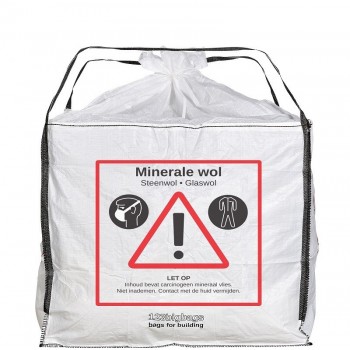
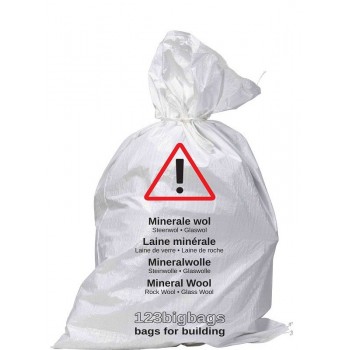
Mineral wool bags from 123BigBags are specially designed for the safe collection, transport and disposal of mineral wool waste including rock wool, glass wool and stone wool. These specialist bags are manufactured according to TRGS 521 regulations for hazardous mineral fibre waste.
Whether you are working on a renovation, demolition or insulation removal project, our mineral wool bags keep your site safe and compliant. We offer different sizes and models depending on the volume of waste you need to handle.
Our standard range includes 1m³ big bags with a closable top skirt, flat bags for larger quantities and a 2.3m³ large format bag for major projects.
|
Mineral wool vs asbestos — what is the difference?
Both mineral wool and asbestos require specialist bags for safe disposal, but the regulations and requirements are very different. It is important to know which material you are dealing with before choosing your bags.
Mineral Wool
- Fibrous insulation used in modern buildings
- Irritating to skin, eyes and lungs
- Not classified as carcinogenic at normal exposure
- No special licence required for removal
- Requires dust-proof PP bags compliant with TRGS 521
- No UN certification required on the bag
- Can be disposed of as normal hazardous waste
|
Asbestos
- Found in buildings constructed before 1997
- Classified as carcinogenic — extremely dangerous
- Banned in Europe since 1997
- Licensed contractor required for removal
- Mandatory double liner and UN certification on bags
- EU warning labels required in multiple languages
- Strict legal regulations for transport and disposal
|
Not sure which material you are dealing with? Always consult a qualified professional before starting removal work.
Mineral Wool Big Bags (1m³)
.jpg) |
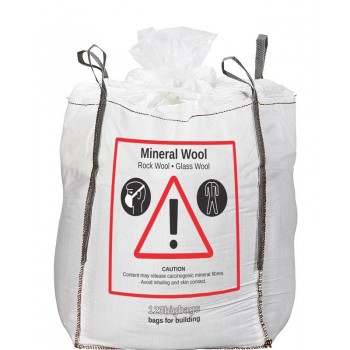
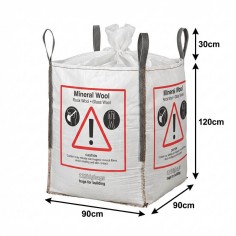
Our standard mineral wool big bag has dimensions of (90×90×120cm) and a capacity of 1m³. It is manufactured from coated woven polypropylene according to TRGS 521 and is suitable for rock wool, glass wool and other hazardous mineral fibre waste.
The bag features a closable top skirt with drawstring to contain fibrous dust during transport. Four reinforced lifting loops allow safe handling with forklifts, cranes and telehandlers. The UV-stabilised material is also suitable for temporary outdoor use.
Mineral Wool Big Bag 1m³ (90×90×120cm) → |
Flat Mineral Wool Bags (700L)
|
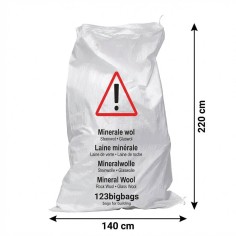
Our flat mineral wool bag has dimensions of (140×220cm) and a capacity of 700 litres. This model is ideal for larger quantities of insulation waste and for renovation and demolition projects where a big bag is not practical.
Made from coated polypropylene fabric with a dust-proof construction. The bag includes an integrated drawstring in the hem for quick and secure closure. The multi-language hazard print (Dutch, French, German and English) makes it suitable for use on construction sites across Europe.
Flat Mineral Wool Bag 700L (140×220cm) → |
%20(1).jpg) |
Large Mineral Wool Big Bag (2.3m³)
%20(1)%20(1).jpg) |
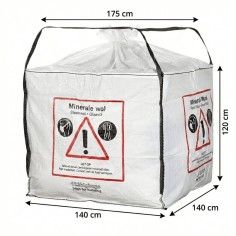
For large-scale insulation removal projects, our 2.3m³ mineral wool big bag offers a high-capacity solution. With dimensions of (140×140×120cm) and a Safe Working Load of 500 kg, this bag is designed for demolition, renovation and major insulation removal work.
The bag is manufactured from dust-proof coated woven polypropylene according to TRGS 521. It includes a closable top skirt, four standard lifting loops for forklift and crane use, and printed hazard pictograms for site safety.
Large Mineral Wool Big Bag 2.3m³ (140×140×120cm) → |
How to use Mineral Wool Bags Safely
Always wear appropriate personal protective equipment (PPE) before handling mineral wool waste. This includes a respirator mask (P2 or P3), protective gloves and a disposable coverall.
- Step 1 — Prepare the bag: Unfold the mineral wool bag and position it close to the work area. The bag stands open during filling.
- Step 2 — Fill the bag: Place mineral wool waste carefully into the bag. Avoid shaking or compressing the material, as this increases fibre release.
- Step 3 — Close the bag: Pull the drawstring on the top skirt firmly closed to contain all fibres. Do not overfill the bag beyond its rated capacity.
- Step 4 — Transport and dispose: Lift the bag using the four reinforced loops with a forklift or crane. Dispose of according to local hazardous waste regulations.
Questions?
Do you have a question about our mineral wool bags or need advice on which model is right for your project? Our team is happy to help. Contact us via the contact form or book a call with us directly.