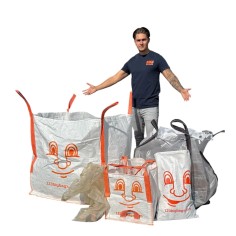
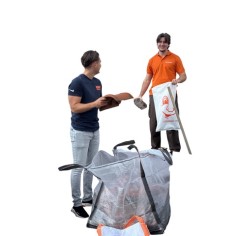
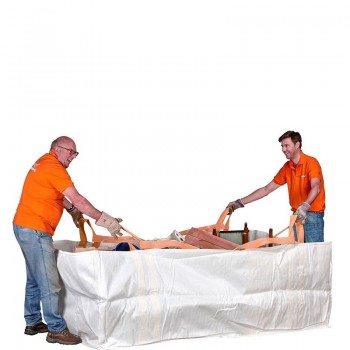
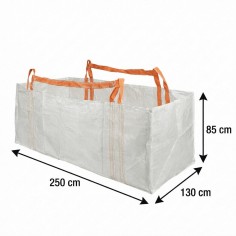
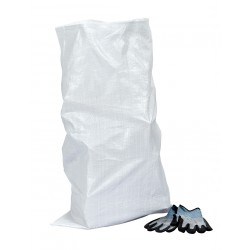
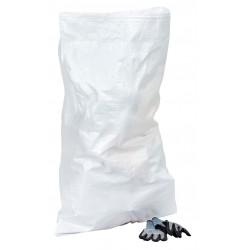
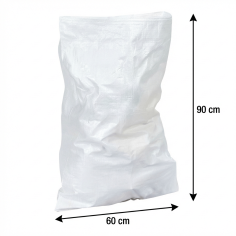
Try our Roofer Starter Kit and get €50 worth of big bags and rubble sacks for just €25. A practical introduction to the most popular bags used on roofing sites across Europe.
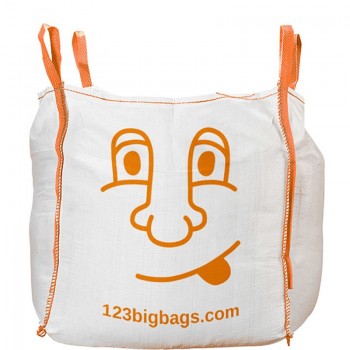
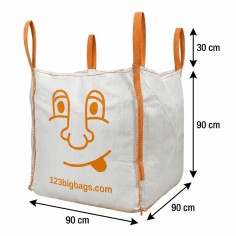
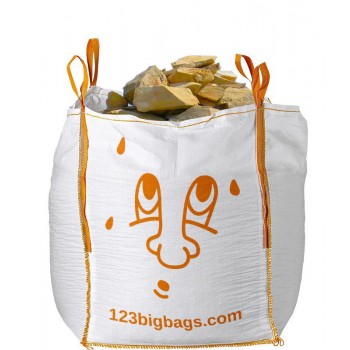
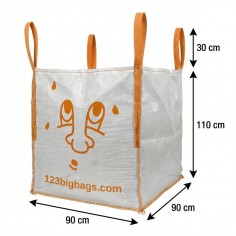
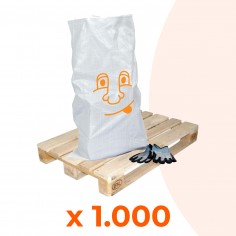
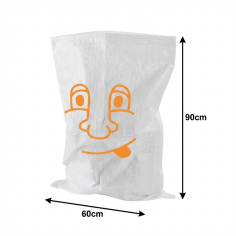
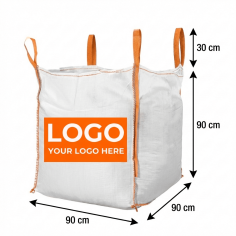
Garden bag 1000 kg with dimensions (90x90x90cm) and 750 litres, made from woven PP at 140 g/m², with 123BigBags smiley logo, ideal for leaves, branches and garden waste.
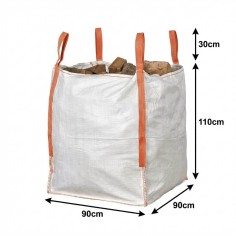
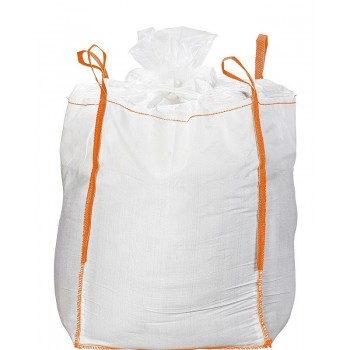
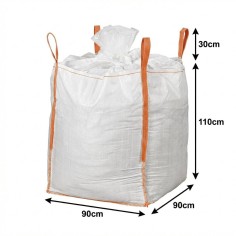
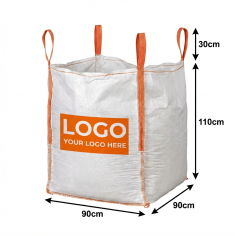
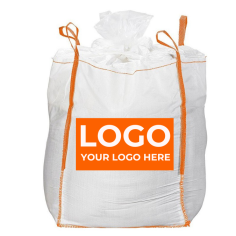
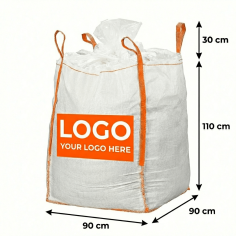
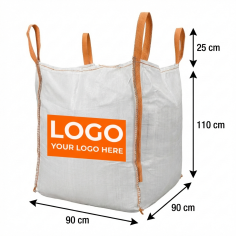
Builders bag 1500 kg with dimensions (90x90x110cm) and 1 m³, made from woven PP at 170 g/m², ideal for aggregates, sand, gravel and heavy construction materials.
Big Bag 1500 kg with dimensions (90x90x110cm) and 1 m³, non-laminated woven PP at 160 g/m², with integrated filling skirt and closing cords for dust and moisture protection.
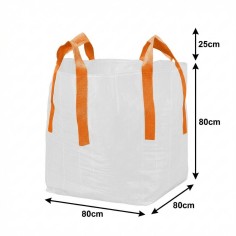
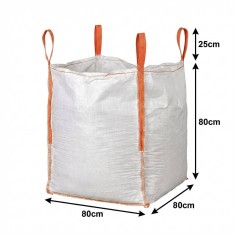
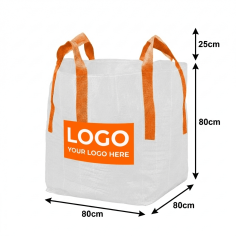
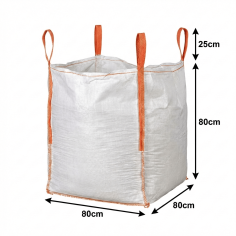
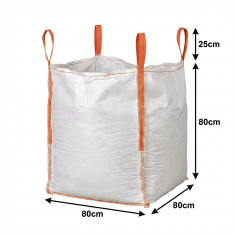
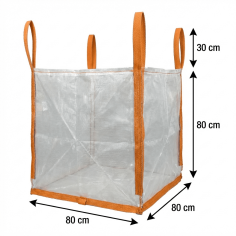
Big Bag 1000 kg with (80x80x80cm) and 0.5 m³, non-laminated woven PP, with cross corner loops for efficient forklift handling, ideal for rubble, stones, gravel and garden waste.
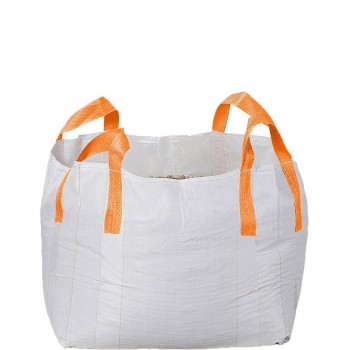
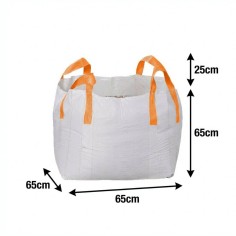
Mini builder bag ⅓ m³ (65x65x65cm), 1500 kg SWL, non-laminated woven PP 200 g/m², with cross corner loops, ideal for tiles, bricks, stones and heavy construction materials.
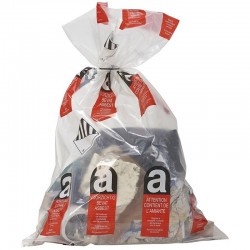
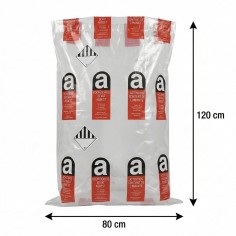
Asbestos LDPE Bag 25 kg (80x120cm), 80 litres, 100 micron transparent LDPE, tear-resistant,with official asbestos logo and UN number, EU compliant, for safe asbestos waste.
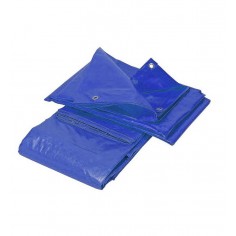
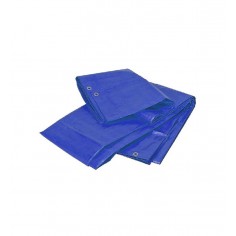
High quality HDPE tarpaulin, dimensions of 3x4 metres (12m²). Extremely resistant tarpaulin, UV stabilized for both indoors and outdoors use. Tarpaulin equipped with eyelets and corner reinforcements. Ideal for skip load containers or as a groundsheet.
High quality HDPE tarpaulin, dimensions of 4x6 metres (24m²). Extremely resistant tarpaulin, UV stabilized for both indoors and outdoors use. Tarpaulin equipped with eyelets and corner reinforcements. Ideal for skip load containers or as a groundsheet.
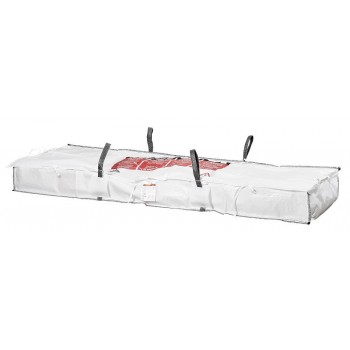
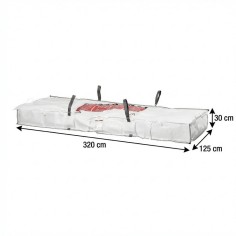
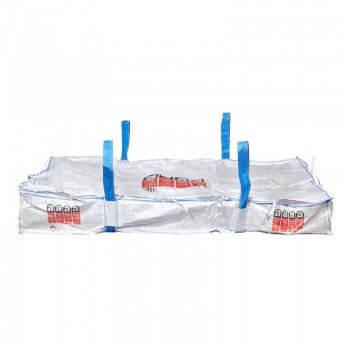
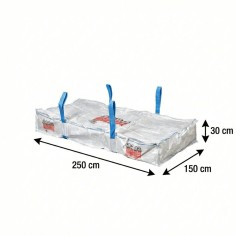
Large Asbestos Sheet Bag (320x125x30cm), 1.2 m³, coated PP, PE liner, four strong loops, closable top, ADR 9, multilingual print, ideal for large asbestos roofing sheets and panels.
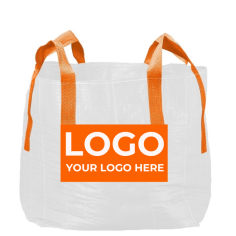
Heavy duty Big bag 2000 kg with (90x90x110cm) and 1 m³, extra thick woven PP, with 123BigBags smiley logo, ideal for stones, bricks, steel and sharp-edged materials.
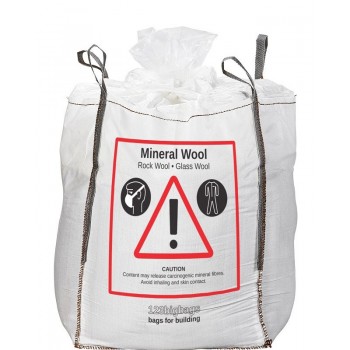
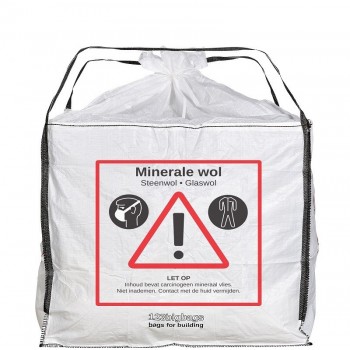
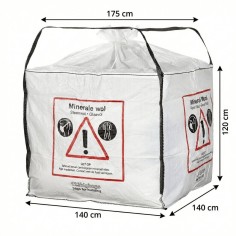
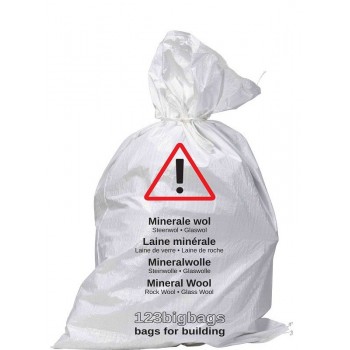
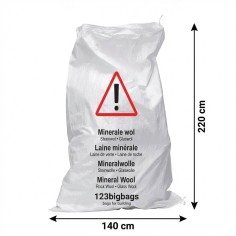
Mineral Wool Rubble Bag 100 kg (140x220cm), 700 litres, coated PP, 100% dustproof, closeable top with cord, compliant with TRGS 521, ideal for rock wool, glass wool and mineral wool waste disposal.
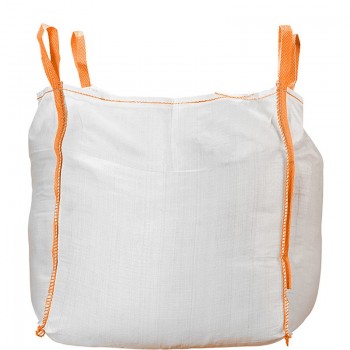
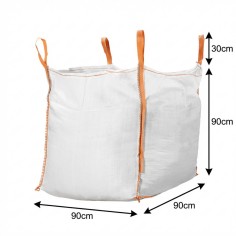
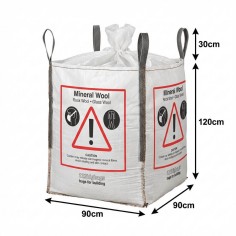
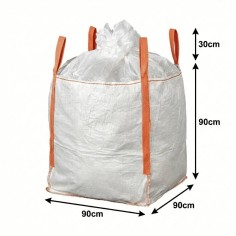
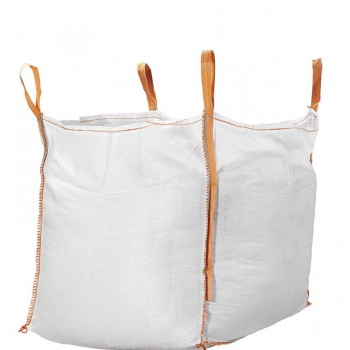
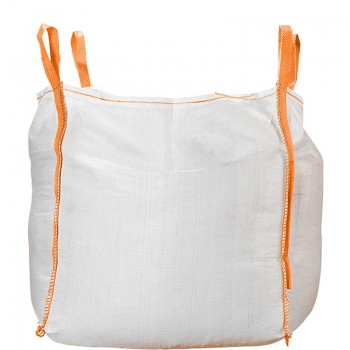
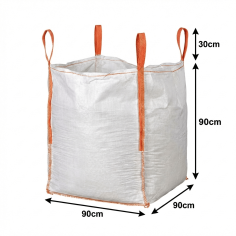
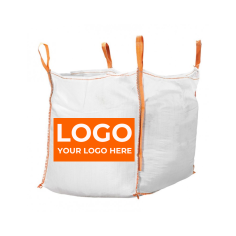
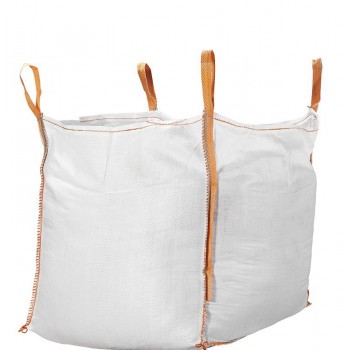
Big Bag 1000 kg (90x90x90cm), 0.75 m³, woven PP 140 g/m², four standard loops and closing skirt with cord, ideal for sand, topsoil and non-sharp construction materials.
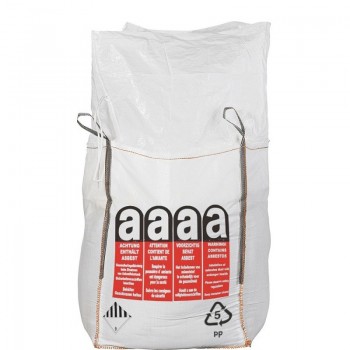
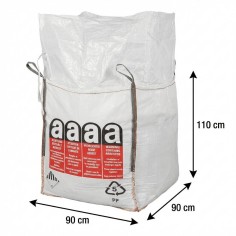
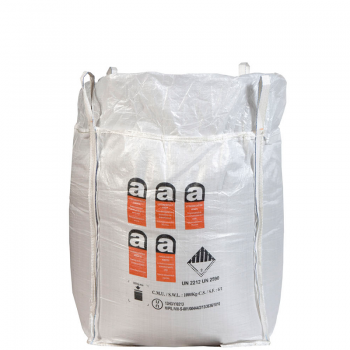
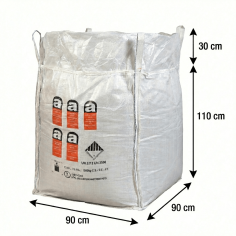
Asbestos Big Bag 1500 kg (90x90x110cm), 1 m³, double 100 µm PE liner, top skirt with cord, multilingual asbestos print, EU and UK compliant, for heavy asbestos waste.
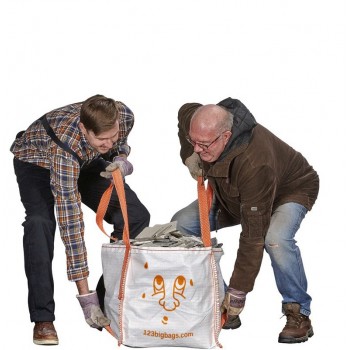
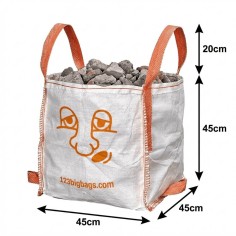
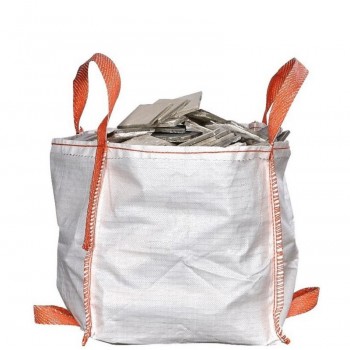
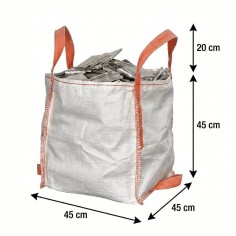
Mini big bag, equipped with two bottom handles for easier lifting. A strong miniature big bag 45x45x45cm, that can contain up to 90 liters and 500kgs of materials and waste. Mini bigbag for designed for multi use, ideal for working with home projects.
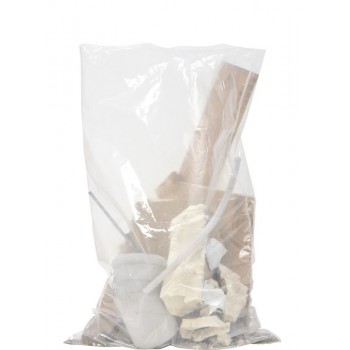
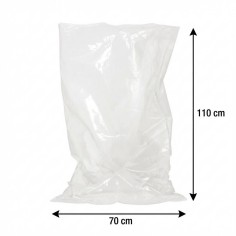
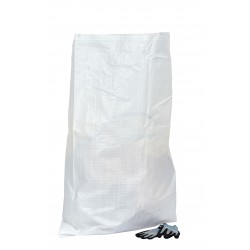
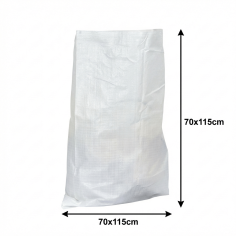
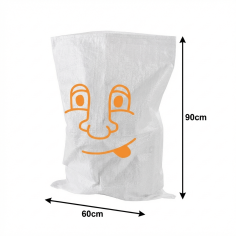
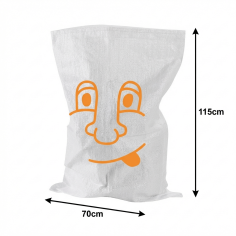
Transparent LDPE Rubble Sack 25 kg (70x110cm), 70 litres, LDPE, tear-resistant, dustproof and waterproof, ideal for sharp construction debris, concrete, glass and screws.
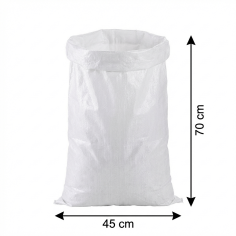
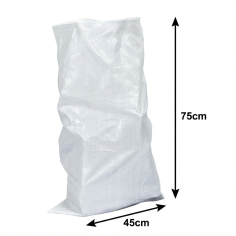
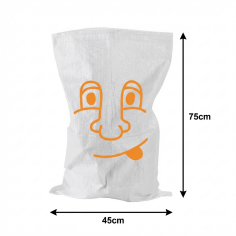
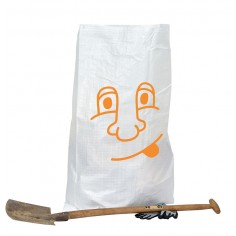
Rubble Sack with Cord 25 kg (45x70cm), 35 litres, woven PP 65 g/m², UV-resistant, closing cord, good drainage, ideal for building waste, rubble and gravel.
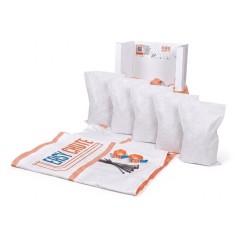
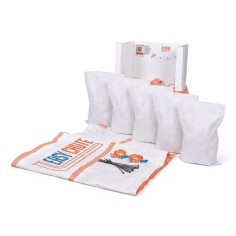
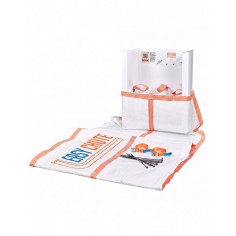
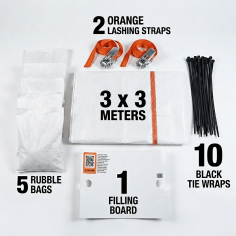
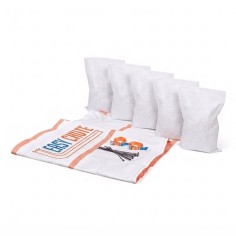
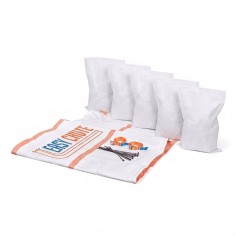
We selected the perfect Easy Chute starter set to tackle your renovation & construction projects! You will find: 1x filling board, 2x lashing straps, 10x tie-wraps, 1x Easy Chute with our logo and 5 x rubble bags 35L to pack your sharp debris. Need longer rubble chutes? You can add extra Easy Chute to suit your need.
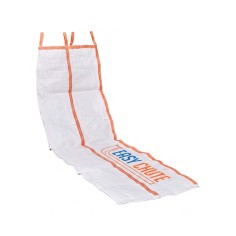
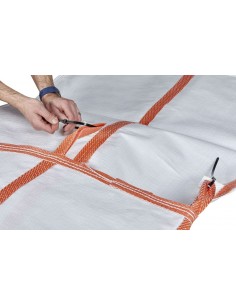
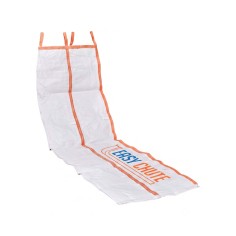
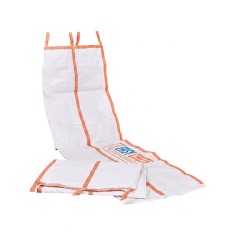
Add-ons for the Easy Chute starter set. The Easy Chute is the most flexible & economical rubble chute. A 3 meters long chute made of woven polypropylene with a diameter of 50cm. Buy extra Easy Chutes and easily attach several chutes together with cable ties to reach the length you need for your rubbish removal project.
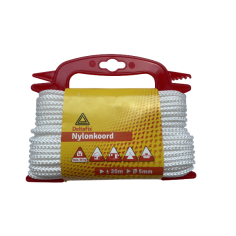
White Braided Nylon Cord 5mm x 20m, holds up to 56 kg, reusable, supplied with winder spool, ideal for attaching rubbish chutes, tarpaulins, closing big bags and rubble bags.
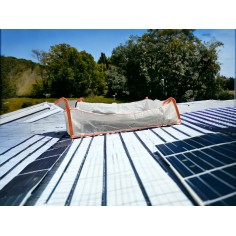
Solar Panel Bag (210x120x40cm), holds up to 10 panels (20-25 kg each), reusable, ideal for safe transport of new panels and responsible recycling of old or damaged panels.
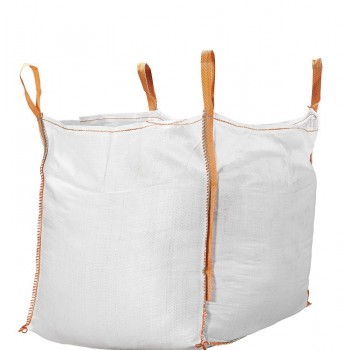
Ton Bag 1500 kg (90x90x90cm), 0.75 m³, woven PP 170 g/m², four standard loops, open top and flat base, ideal for sand, topsoil, rubble and non-sharp construction materials.
We selected the perfect Easy Chute starter set to tackle your renovation & construction projects! You will find: 1x filling board, 2x lashing straps, 10x tie-wraps, 2x Easy Chute with our logo and 5 x rubble bags 35L to pack your sharp debris. Need longer rubble chutes? You can add extra Easy Chute to suit your need.
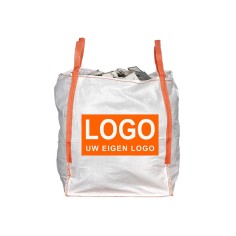
Custom Big Bag 1500 kg with dimensions (90x90x110cm) and 1 m³, non-laminated woven PP, with integrated filling skirt and your company logo printed in up to 4 colours.
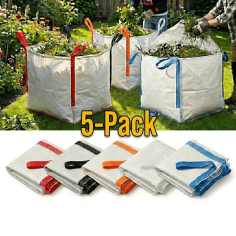
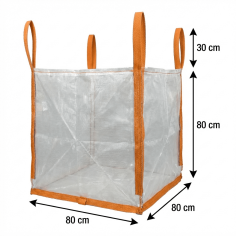
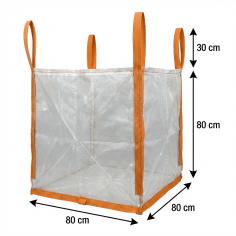
Pack of 5 Tonne Bags 1000 kg (80x80x80cm), 0.6 m³, woven PP 130 g/m², four standard lifting loops, ideal for sand, gravel, topsoil and construction waste.
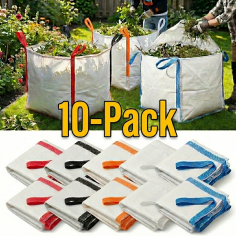
Pack of 10 Tonne Bags 1000 kg (80x80x80cm), 0.6 m³, woven PP 130 g/m², four standard lifting loops, ideal for sand, gravel, topsoil and construction waste.
Reusable Building Waste Bag 1000 kg (80x80x80cm), 0.5 m³, woven PP 180 g/m², two handles, closing cover and A4 document pocket, fits through standard doors.
We selected the perfect Easy Chute starter set to tackle your renovation & construction projects! You will find: x filling board, 2x lashing straps, 5x rubble bags, 10x tie-wraps & 3x Easy Chute. Need longer rubble chutes? You can add extra Easy Chute to suit your need.
We selected the perfect Easy Chute starter set to tackle your renovation & construction projects! You will find:2x lashing straps, 10x tie-wraps, 2x Easy Chute with our logo and 5 x rubble bags 35L to pack your sharp debris. Need longer rubble chutes? You can add extra Easy Chute to suit your need.
We selected the perfect Easy Chute starter set to tackle your renovation & construction projects! You will find: 2x lashing straps, 10x tie-wraps, 3x Easy Chute with our logo and 5 x rubble bags 35L to pack your sharp debris. Need longer rubble chutes? You can add extra Easy Chute to suit your need.
Bags and Equipment for Roofing Projects
Roofing work produces several types of waste at once: broken tiles, old insulation, general rubble and in older buildings, asbestos cement sheets. Most contractors order a combination of products depending on the materials coming off the roof and how the waste needs to reach ground level. Below is an overview of what each product is used for and when it makes sense to choose one over another.
Roofing Bags and Equipment
🧱 Rubble Bags: For Tiles, Slate and General Debris
The most common choice for broken roof tiles, slate, mortar and demolition waste. Most roofers use rubble bags over big bags for smaller loads because they are easy to carry, fill quickly and can go straight into a van or trailer without lifting equipment. Available from 35L to 120L in heavy-duty woven polypropylene.
⚠️ Asbestos Bags: Required by Law for Hazardous Roofing Materials
Standard rubble bags are not suitable for asbestos cement roofing sheets. Certified asbestos bags have a PE inner liner to contain fibres, a drawstring closure and a printed hazard warning. They are required for legal disposal and comply with TRGS 519 in Germany and equivalent EU hazardous waste regulations. Buildings constructed before 1990 should be tested before any removal work begins.
📦 Big Bags: For Large Volumes Collected at Ground Level
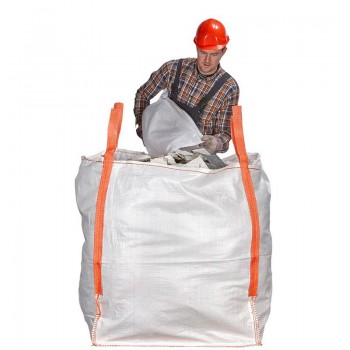
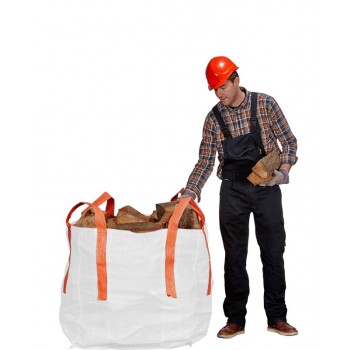
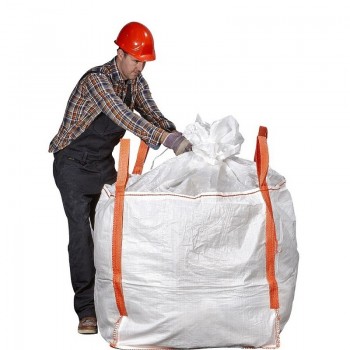
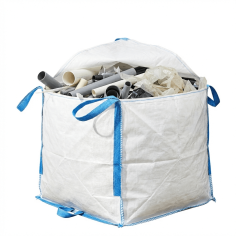
A 1m³ big bag holds up to 1500 kg of roofing waste and is lifted by crane, forklift or telehandler. Contractors use big bags when a skip is not practical or when waste is loaded directly onto a flatbed. They are a better choice than a skip bag when lifting equipment is already on site.
🌀 Easy Chute Debris Chute: For Lowering Waste Safely from Height
A modular textile debris chute that attaches to a window, balcony or scaffold point and directs waste into a skip or big bag on the ground. Each section is 3 metres and sections connect to reach any floor. Roofers choose the Easy Chute over rigid plastic chutes because it folds flat, fits in a van and produces significantly less noise on residential streets.
☀️ Solar Panel Bags: For Protecting Panels During Renovation
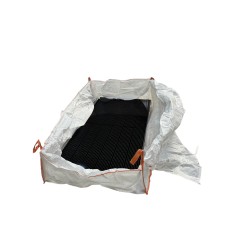
Solar panels removed from a roof during renovation need to be stored on site before remounting. Without protection they are vulnerable to scratches, debris contact and moisture. A dedicated solar panel bag provides enclosed storage that prevents surface damage and reduces the risk of costly repair or replacement.
🗑️ Skip Bags: When No Lifting Equipment Is Available
A skip bag works like a traditional metal skip but costs less and takes up less space on a driveway or road. It is collected by a skip hire company once full. Homeowners and smaller roofing contractors often choose a skip bag over a big bag because no crane or forklift is needed to remove it.
🔵 Tarpaulins: For Property Protection During Open Roof Phases
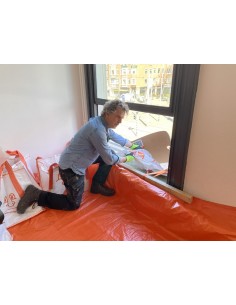
A waterproof tarpaulin spread over scaffolding or fixed across an opening keeps rain out and catches falling debris while the roof is exposed. UV-stabilised versions hold up across multi-day jobs. Used by both professional roofers and homeowners to protect gardens, driveways and vehicles during the work.
Asbestos Roof Removal: What the Law Requires
Asbestos is not dangerous when intact, but cutting or breaking asbestos cement sheets releases fibres that are harmful when inhaled. Removal must follow strict rules across all EU countries.
Legal requirements
Licensed contractor required in most EU countries
Certified double-lined bags with printed hazard warning
Hazard Class 9 transport documentation required
Waste must go to a licensed asbestos disposal facility
On-site handling
Never break, drill or cut asbestos cement sheets
Wet the material before handling to suppress airborne dust
Full PPE required including a P3 respirator and coveralls
Seal and label each bag immediately after filling
How to Use a Debris Chute on a Roof
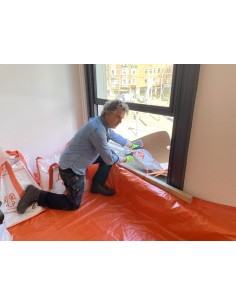
A debris chute removes the need to carry waste down ladders, which is one of the most common causes of injury on roofing sites. Here is how the Easy Chute system works in three steps.
1
Fix the top section to a window opening, balcony or scaffold point using the included anchor straps.
2
Connect additional 3-metre sections using cable ties through the reinforced side loops until the chute reaches the ground container.
3
Feed waste in from the top. For sharp tiles, bag the material in a rubble bag first to protect the chute fabric.
Frequently Asked Questions about Roofing Bags
Common questions about roofing waste removal, asbestos disposal and choosing the right bags for your project.
For a roofing project in the UK you will typically need rubble bags for broken tiles and general debris, asbestos bags if the roof contains asbestos cement sheets, and tarpaulins to protect the property while the roof is open. A debris chute is useful for lowering waste from height without carrying it down ladders. Big bags or skip bags are used to collect waste at ground level depending on whether lifting equipment is available on site. Yes. Asbestos cement was widely used in roofing across Europe until the late 1980s. It is most commonly found in corrugated roof sheets on garages and outbuildings, flat roofs on lean-to structures and older fibre cement tiles on residential properties. Any building constructed before 1990 should be tested for asbestos before removal work begins. Yes. In Germany asbestos removal must be carried out by a licensed contractor in accordance with TRGS 519. The removed material must be placed in certified asbestos bags with a PE inner liner, drawstring closure and printed hazard warning. Transport requires Hazard Class 9 documentation and the waste must be taken to a licensed disposal facility. Yes, broken roof tiles can go into a skip bag as long as they do not contain asbestos. Roof tiles are heavy so do not overfill the bag. Most skip bags have a maximum weight limit stated on the bag. For large volumes a big bag lifted by crane or forklift is often more practical on a professional roofing site. A debris chute is the safest and most efficient method for removing roofing waste from height. The Easy Chute system uses modular 3-metre sections that connect together and can reach any floor height. The chute is fixed to a window or scaffold point at the top and directs waste into a skip or big bag at ground level. This avoids carrying heavy material down ladders which is one of the most common causes of injury on roofing sites. A heavy duty waterproof tarpaulin is the standard solution for protecting gardens, driveways and vehicles during roof replacement work. Tarpaulins can be spread across garden areas, fixed over scaffolding or placed under a debris chute to catch any material that misses the collection bag. UV-stabilised tarpaulins are recommended for jobs that run over several days. Solar panels should not be left unprotected outdoors during roof renovation. Exposure to rain, debris and UV without the correct protection can damage the photovoltaic cells and reduce panel efficiency. A dedicated solar panel bag provides enclosed storage that prevents scratches and moisture ingress while the panels are off the roof. A debris chute is used to transport waste downward from height to a collection point at ground level. A skip bag is the collection point itself, placed on a driveway or road and filled with the waste before being collected by a skip hire company. On most roofing sites the two are used together: a debris chute feeds waste from the roof into a skip bag or big bag waiting below. The number of rubble bags needed depends on the size of the roof and the type of tiles being removed. As a rough guide, a standard 1m³ big bag holds around 1000 to 1500 kg of roof tiles. For a typical semi-detached house, expect to fill two to four 1m³ big bags or a larger number of smaller rubble bags. It is always worth ordering more than you expect to need as unused bags can be stored flat and used on the next job. Yes. 123BigBags ships roofing bags including rubble bags, asbestos bags, big bags and tarpaulins across Europe. Orders placed before 15:00 on working days are dispatched the same day. Delivery times vary by country. Have a question not covered here? Contact our team and we will help you find the right solution.